
UMR7178
The Hubert Curien pluridisciplinary Institute - IPHC
The IPHC, a joint research unit under the joint supervision of the CNRS and the University of Strasbourg (UMR7178), is a successful example of multidisciplinarity where research teams from different scientific cultures (ecology, physiology and ethology, chemistry and subatomic physics) are developing very high-level multidisciplinary programs based on scientific instrumentation.

Les Actualités
Voir toutes les actualités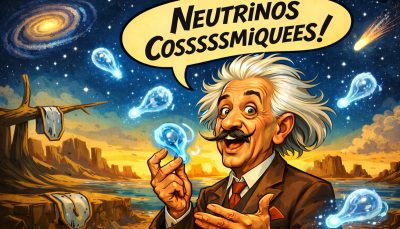
31/03 - Physique pour Tous ! | Les neutrinos cosmiques
Le 5ème et dernier cours du cycle de printemps 2026 des cours "Physique pour tous !" est consacré spécifiquement aux neutrinos cosmiques. On célèbre à cette occasion le 100ème Module Optique Digital (DOM) du télescope KM3NeT produit à l’IPHC !

Un boson de Higgs peut-être plus atypique que prévu ?
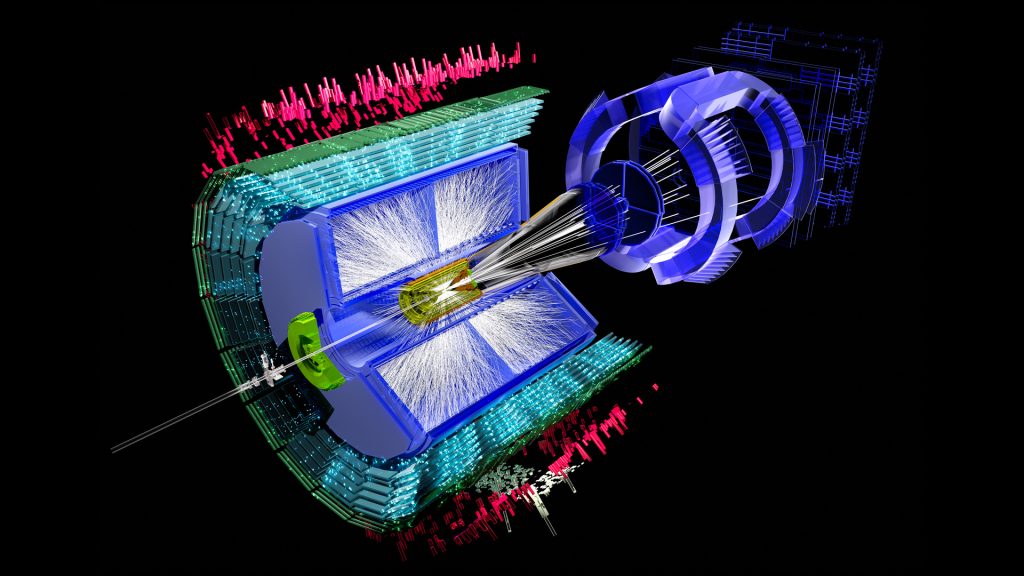
En étudiant les désintégrations du boson de Higgs en paires de leptons tau, les physiciens recherchent d'éventuelles différences subtiles entre matière et antimatière, des « violations de CP », essentielles pour comprendre pourquoi l'Univers est aujourd'hui dominé par la matière.
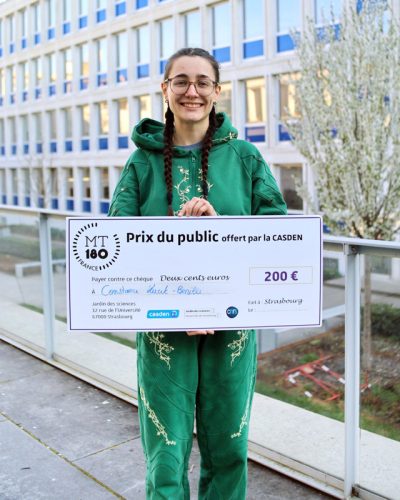
Finale Alsace MT180 | Le Prix du public décerné à Constance Lucet-Bérille
Lors de la Finale Alsace du concours MT180, Constance Lucet-Bérille, doctorante au sein de l'équipe RePSeM, a été élue coup de cœur des spectateurs. Elle remporte le Prix du Public Alsace 2026, précieux sésame qui lui ouvre les portes de la finale Grand Est !
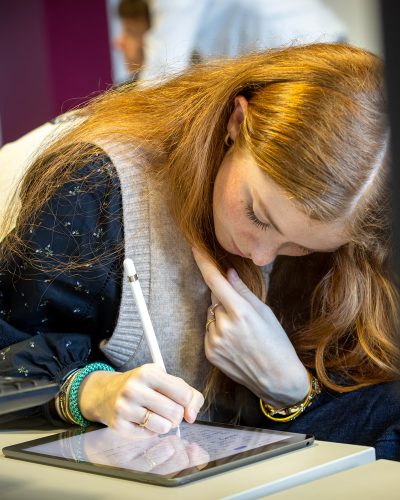
Des élèves de Terminale du lycée Kléber en immersion dans la physique des particules
Des élèves de Terminale du lycée Kléber de Strasbourg ont été, le temps d’une journée, dans la peau de vrais chercheurs au sein des collaborations internationales, dans le cadre des Masterclasses internationales en physique des particules.

Curieux Festival | Corps, matière, tango
Rencontre entre musique, physique et danse, avec Sandrine Courtin, physicienne et danseuse de tango argentin, et le célèbre accordéoniste aux multiples influences Marcel Loeffler.

Innovation | Transformer des déchets en ressources avec Maud Villain-Gambier
Maud Villain-Gambier, experte en génie des procédés, développe des alternatives vertes aux produits issus du pétrole. Un projet à fort potentiel industriel.
Suivez-nous
Upcoming events
Go to agenda29 avril 2026
DUNE low energy calibration and physics
Speakers: emile lavaut (PHE ijclab) https://indico.in2p3.fr/event/39529/